The choice between calling a mobile mechanic and booking a shop is usually made in a stressful ten minutes, with a car that will not start or a noise that just started. It does not have to be guessed. The decision runs on a few stable facts: whether the job needs the car in the air, whether it needs a machine that does not travel, whether the car can move at all, and what happens if the repair turns out bigger than expected. This guide turns those facts into a decision you can make calmly, in Shelby or anywhere.
Neither option is the budget option or the quality option as a category. Each is the right tool for a band of work, and the bands are wide enough that most drivers will use both over the life of a car.
Start with the car, not the provider
Ask first whether the car runs and drives safely. A no-start in your driveway is the mobile mechanic's strongest case, because every alternative begins with a tow. A car that drives fine but needs tires, alignment, or transmission work has already answered the question the other way: those jobs live in a shop, and driving there costs nothing extra. A car with a safety problem, soft brakes, a severe pull, steam, or a red warning light, should not be driven to either; it should be towed to a shop where the full repair can happen once it arrives.
| Your situation | Better first call | Why |
|---|---|---|
| Car will not start at home | Mobile mechanic | Battery, starter, and alternator checks happen in the driveway and can skip the tow entirely. |
| Car drives, needs tires or alignment | Shop | Tire machines and alignment racks do not travel. |
| Check engine light on, car runs normally | Either, usually a shop | A mobile scan reads codes; a shop can complete deeper diagnostics and the repair in one visit. |
| Transmission slipping or not engaging | Shop, by tow if needed | Diagnosis and any repair need a lift and fluid equipment. |
| Brake pedal feels soft or low | Shop, by tow | Hydraulic brake work is safety-critical and lift-friendly; driving on it is the risk. |
| Dead battery at work or school | Mobile mechanic | Testing and replacement on the spot gets you home the same day. |
| Pre-purchase inspection of a used car | Shop | A lift inspection underneath is the whole point of the exercise. |
| Routine maintenance, car drives fine | Either | Choose on schedule and preference; oil and filters travel well, inspections go deeper on a lift. |
The equipment line
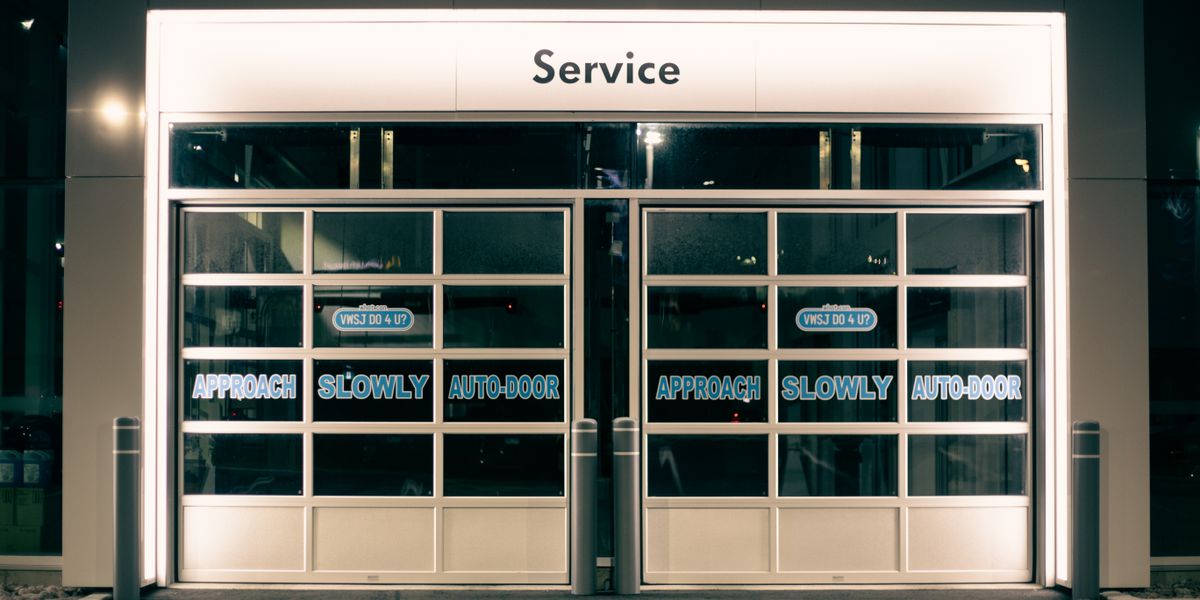
Picture what the job physically requires. Work under the car, exhaust, suspension, steering racks, transmission service, needs a lift and stands that a driveway visit cannot safely reproduce. Work that needs a fixed machine, tire mounting, balancing, alignment, refrigerant recovery, is shop-only by definition. Engine diagnostics split down the middle: a portable scanner reads codes anywhere, but oscilloscopes, smoke machines for leak hunting, and manufacturer-level software live at shops like City Service in Shelby. When the diagnosis is the hard part, the shop is usually the shorter path even if the repair itself is small.
The what-if question
Repairs have a habit of growing. The alternator job reveals a belt at the end of its life; the brake job finds a caliper seizing. A shop absorbs growth easily: parts get ordered, the car stays on the lift, and you approve the addition by phone. A mobile job that grows can stall, with the car apart in your driveway waiting on a return visit. Neither outcome is anyone's fault, but if your car is older, higher mileage, or new to you and uninspected, the odds of growth are real, and they argue for starting in the place that can finish.
Questions that protect you either way
Ask any provider, mobile or shop, the same four things. Is the estimate written, with parts and labor separated? What warranty covers the work, and for how long? Who supplies the parts, and what brand? What will you do if you find the problem is bigger than the quote? The good answers sound alike in both settings: specific, unhurried, and written down. Vague answers are also alike in both settings, and they are the clearest signal to call the other number on your list.
A settled way to think about it
Use mobile help for stranded cars and self-contained jobs. Use a shop for lift work, machine work, deep diagnostics, and anything safety-critical. Decide by the job's needs rather than the week's convenience, and the choice stops feeling like a gamble, because it never really was one.
Common questions
Can a mobile mechanic handle a check engine light?
They can read the code and handle common, accessible causes. Deeper faults needing a lift, smoke testing, or advanced diagnostics belong in a shop, and a good mobile mechanic will say so.
Is it rude to use both a mobile mechanic and a shop?
Not at all. Drivers do it constantly, matching each job to its setting. Providers expect it, and the honest ones will refer you across the line when a job belongs on the other side.
What if I am not sure whether the job needs a lift?
Describe the symptom when you call and ask directly. Transmission, exhaust, suspension, and steering work almost always do. Battery, starter, and many brake and belt jobs often do not.
Photos in this guide are representative stock images.
← All guides from City Service← Back to City Service